Jaisalmer
Amar Sagar Lake
 |
Location:
7 K.M. in the western outskirts of Jaisalmer
How to reach: Hire a cab or share an Auto-rickshaw
Attractions: Lake and a Palace
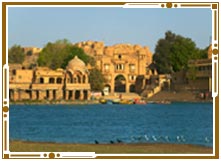
Amar Sagar is a small and beautiful lake cum Oasis and is adjacent to a 17th Century palace called the Amar Singh Palace. Maharawal Akhai Singh built this palace in honor of one of his predecessors Amar Singh. Next to the palace are pavilions with a large stairs leading down to the Amar Sagar Lake. This haveli has been constructed in the pattern of apartments. The Amar Sagar is a five story high haveli and is famous for its murals. Wherever you go in this haveli, you will notice beautiful murals painted with delicate efforts.
You can find many of wells and ponds in the surrounding which have a royal air about them. There is an old Shiva temple in the complex itself. Amar Singh built this because he was supposed to be an ardent follower of Lord Shiva, a Hindu God related to destruction.
How to reach: Hire a cab or share an Auto-rickshaw
Attractions: Lake and a Palace
Amar Sagar is a small and beautiful lake cum Oasis and is adjacent to a 17th Century palace called the Amar Singh Palace. Maharawal Akhai Singh built this palace in honor of one of his predecessors Amar Singh. Next to the palace are pavilions with a large stairs leading down to the Amar Sagar Lake. This haveli has been constructed in the pattern of apartments. The Amar Sagar is a five story high haveli and is famous for its murals. Wherever you go in this haveli, you will notice beautiful murals painted with delicate efforts.
You can find many of wells and ponds in the surrounding which have a royal air about them. There is an old Shiva temple in the complex itself. Amar Singh built this because he was supposed to be an ardent follower of Lord Shiva, a Hindu God related to destruction.
Bada Bagh Jaisalmer
 |
Location:
6 Km off the Jaisalmer city on Ramgarh Road
How to reach: Take a cab or hire a Rickshaw
Attraction: Garden and Cenotaph
Bada Bagh, which literally means 'Big Garden', is located on the Ramgarh road. It was commissioned by Maharawal Jait Singh in the early 16th century and completed by his son Lunakaran after his death.
The site has three different things to watch, a garden, a tank and a dam. In the vicinity itself you will find Govardhan Stambh (pillar). This pillar was constructed to commemorate the construction of the Dam and the tank. In the local dialect the Dam and the tank are known as Jait Bandh and the Jait Sar respectively. It is believed that these are based on the name of the man who constructed them. The Jait Bandh is a dominating structure. It is about 1,200 feet in length and 350 feet in width. If you observe it closely you will notice that this has been built out of solid blocks of stone. The same material has been used for the construction of well as well as the tank.
Cenotaph
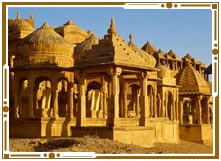
Other interesting monuments in the vicinity are the Cenotaphs. These cenotaphs also known as chattris and were constructed by the various Bhatti rulers. One cenotaph has been erected for each ruler. The oldest among them is the cenotaphs of Maharawal Jait Singh who reigned from 1470-1506. This tradition was discontinued when in 1947, one of the prince died of a mysterious disease. This was taken as a bad omen and thus this tradition came to its end.
How to reach: Take a cab or hire a Rickshaw
Attraction: Garden and Cenotaph
Bada Bagh, which literally means 'Big Garden', is located on the Ramgarh road. It was commissioned by Maharawal Jait Singh in the early 16th century and completed by his son Lunakaran after his death.
The site has three different things to watch, a garden, a tank and a dam. In the vicinity itself you will find Govardhan Stambh (pillar). This pillar was constructed to commemorate the construction of the Dam and the tank. In the local dialect the Dam and the tank are known as Jait Bandh and the Jait Sar respectively. It is believed that these are based on the name of the man who constructed them. The Jait Bandh is a dominating structure. It is about 1,200 feet in length and 350 feet in width. If you observe it closely you will notice that this has been built out of solid blocks of stone. The same material has been used for the construction of well as well as the tank.
Cenotaph
Other interesting monuments in the vicinity are the Cenotaphs. These cenotaphs also known as chattris and were constructed by the various Bhatti rulers. One cenotaph has been erected for each ruler. The oldest among them is the cenotaphs of Maharawal Jait Singh who reigned from 1470-1506. This tradition was discontinued when in 1947, one of the prince died of a mysterious disease. This was taken as a bad omen and thus this tradition came to its end.
Desert National Park Jaisalmer
 |
Location:
40 K.M. from Jaisalmer
When to Visit: From November to March
How to Reach: Hire a cab or take a Bus ride
Activities: Jeep safari, Camping, Bonfire and bird watching
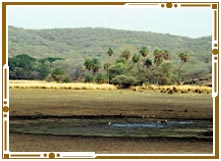
The Desert National Park is situated in the Indian state of Rajasthan near Jaisalmer. The Desert National Park is a protected sanctuary. The park is considered not only the largest in the state of Rajasthan but among the largest in India. The catchments area of the Desert National Park is around 3100 sq. km. The desert is a harsh place to sustain life and thus most of the fauna and flora live on the edge. Nevertheless this place attracts large hoard of migratory birds due to its close proximity to Bharatpur.
The great Indian Bustard is a magnificent bird and can be seen in considerably good numbers. It migrates locally in different seasons. The region is a heaven for migratory and resident birds of the desert. One can see many Eagles, Harriers, Falcons, Buzzards, Kestrel and Vultures. Short- toed Eagles, Tawny Eagles, Spotted Eagles, Laager Falcons and Kestrels are the most common among these.
When to Visit: From November to March
How to Reach: Hire a cab or take a Bus ride
Activities: Jeep safari, Camping, Bonfire and bird watching
The Desert National Park is situated in the Indian state of Rajasthan near Jaisalmer. The Desert National Park is a protected sanctuary. The park is considered not only the largest in the state of Rajasthan but among the largest in India. The catchments area of the Desert National Park is around 3100 sq. km. The desert is a harsh place to sustain life and thus most of the fauna and flora live on the edge. Nevertheless this place attracts large hoard of migratory birds due to its close proximity to Bharatpur.
The great Indian Bustard is a magnificent bird and can be seen in considerably good numbers. It migrates locally in different seasons. The region is a heaven for migratory and resident birds of the desert. One can see many Eagles, Harriers, Falcons, Buzzards, Kestrel and Vultures. Short- toed Eagles, Tawny Eagles, Spotted Eagles, Laager Falcons and Kestrels are the most common among these.
Khuri Sand Dunes
 |
Location:
In the outskirts of Jaisalmer, 40 K.M. southwest from
the main city
How to reach: Take a camel safari or any powerful SUV
Attractions: Camel safari, Mud houses and Desert solitude
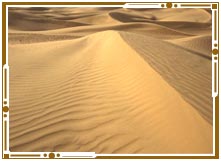
Khuri sand dunes are slowly picking up in the must visit charts of tourists. If you find Sam sand dunes a bit crowded then you can very well opt for Khuri sand dunes. Situated just 40 K.M. off the town, Khuri is a must visit for tourists seeking solitude in the desert. It is a peaceful place with houses of mud and straw decorated like the patterns of Persian carpets.
The Khuri sand dunes offer you a memorable experience in the land of the Rajputs. Enjoy the ride on camel back and let the place itself take you to its mesmerizing heights. Get closer to the local way of living with a close view of thatched straw roofs, camels, narrow streets and the local bazaar. At the night, organize a campfire with the fellow tourists (if any) and listen to the songs of 'Kalbeliyas'.
How to reach: Take a camel safari or any powerful SUV
Attractions: Camel safari, Mud houses and Desert solitude
Khuri sand dunes are slowly picking up in the must visit charts of tourists. If you find Sam sand dunes a bit crowded then you can very well opt for Khuri sand dunes. Situated just 40 K.M. off the town, Khuri is a must visit for tourists seeking solitude in the desert. It is a peaceful place with houses of mud and straw decorated like the patterns of Persian carpets.
The Khuri sand dunes offer you a memorable experience in the land of the Rajputs. Enjoy the ride on camel back and let the place itself take you to its mesmerizing heights. Get closer to the local way of living with a close view of thatched straw roofs, camels, narrow streets and the local bazaar. At the night, organize a campfire with the fellow tourists (if any) and listen to the songs of 'Kalbeliyas'.
Lodurva Jaisalmer
 |
Location:
Outskirts of Jaisalmer, 16 Km from the city
How to Reach: You can hire a cab or auto rickshaw
Importance: Jain temple ruins, Kalptaru and Peacocks
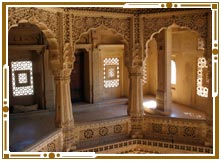
Lodurva is the ancient capital of Bhattis Rajputs and was once a flourishing city but lost most of the splendor when the Bhattis shifted their capital to Jaisalmer. Nevertheless this place is a major tourist attraction and attracts a lot of attention due to ruins of Jain temples. The most mesmerizing experience will be the peacock dance amid exotic Lodurva ruins. Yes, Peacocks are a great pull and they are in plenty here.
Lodurva is also known for its Jain temples. The temples are made of bright yellow sandstones. Though in ruins, the splendors of these Jain temples are clearly visible. You will find temple walls decorated with the pictures of Lord Parsvanath, the 23rd Jain Tirthankar. The beautiful Jaali works make these temples a piece of marvel. You will notice the splendid and dominating arch in the main temple building. These arches are typical of the Dilwara style of temple architecture.
How to Reach: You can hire a cab or auto rickshaw
Importance: Jain temple ruins, Kalptaru and Peacocks
Lodurva is the ancient capital of Bhattis Rajputs and was once a flourishing city but lost most of the splendor when the Bhattis shifted their capital to Jaisalmer. Nevertheless this place is a major tourist attraction and attracts a lot of attention due to ruins of Jain temples. The most mesmerizing experience will be the peacock dance amid exotic Lodurva ruins. Yes, Peacocks are a great pull and they are in plenty here.
Lodurva is also known for its Jain temples. The temples are made of bright yellow sandstones. Though in ruins, the splendors of these Jain temples are clearly visible. You will find temple walls decorated with the pictures of Lord Parsvanath, the 23rd Jain Tirthankar. The beautiful Jaali works make these temples a piece of marvel. You will notice the splendid and dominating arch in the main temple building. These arches are typical of the Dilwara style of temple architecture.
Phalodi Travel
 |
Location:
140 K.M. near Jaisalmer
Major Attractions: Latiyal Mata Temple, Demoiselle Cranes, Ossian and Ramdevra temples, 300 years old Jain Temple
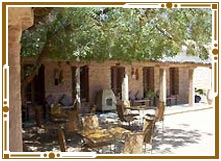
Located 141 km from Jodhpur District headquarters, Phalodi is an old caravan center in the Thar Desert. This town was a trading center being on the land route from North Western India into Central India. The area saw a lot of movement in those times. Though various rulers ruled this city, it was originally under the rule of Rao Maldev Rathore of Jodhpur. Thereafter for a short while this town came under the direct rule of Emperor Akbar. But Akbar's policy of appeasement saw the town in the hands of the rulers of Jaisalmer.
Phalodi town is famous for its delicate 'jooti'. These shoes come in various shapes and sizes but will be decorated with heavy embroidery. You can bargain and buy some of these. If you like bangles then this place has to offer a lot. You can find it wherever you go in the town. A small bead jeweler's shop quickly puts together Bishnoi style necklace complete with enormous pendants. Correspondingly, workmanship and artistry of a high order also appears to be an inborn gift of the people here.
How to Reach Phalodi
By Air
Jodhpur is the nearest airport, which is 135 km away.
By Rail
Daily overnight trains from Delhi, Jodhpur, Jaipur and Jaisalmer; the railway station is 1.5 km away.
By Road
Phalodi is well connected by road network from Delhi, Mumbai, Bikaner, Nagaur and Jodhpur.
Major Attractions: Latiyal Mata Temple, Demoiselle Cranes, Ossian and Ramdevra temples, 300 years old Jain Temple
Located 141 km from Jodhpur District headquarters, Phalodi is an old caravan center in the Thar Desert. This town was a trading center being on the land route from North Western India into Central India. The area saw a lot of movement in those times. Though various rulers ruled this city, it was originally under the rule of Rao Maldev Rathore of Jodhpur. Thereafter for a short while this town came under the direct rule of Emperor Akbar. But Akbar's policy of appeasement saw the town in the hands of the rulers of Jaisalmer.
Phalodi town is famous for its delicate 'jooti'. These shoes come in various shapes and sizes but will be decorated with heavy embroidery. You can bargain and buy some of these. If you like bangles then this place has to offer a lot. You can find it wherever you go in the town. A small bead jeweler's shop quickly puts together Bishnoi style necklace complete with enormous pendants. Correspondingly, workmanship and artistry of a high order also appears to be an inborn gift of the people here.
How to Reach Phalodi
By Air
Jodhpur is the nearest airport, which is 135 km away.
By Rail
Daily overnight trains from Delhi, Jodhpur, Jaipur and Jaisalmer; the railway station is 1.5 km away.
By Road
Phalodi is well connected by road network from Delhi, Mumbai, Bikaner, Nagaur and Jodhpur.
Sam Sand Dunes
 |
Location:
In the outskirts of Jaisalmer, 42 K.M. from the main town
How to reach: Jeep or any other 4 wheel drive SUV or Camel back according to your convenience
Famous for: Sand, sands and only sands
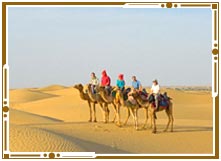
There is no point coming to the Thar Desert if you don't go for the Desert Safari. That is why Sam sand dunes are becoming the major attraction in Jaisalmer. This is the closest place from where you can loose yourself in 'the Great Thar Desert'. Sam has a truly magnificent stretch of sweeping dunes, with sparse or no vegetation. The best way to get here, of course, is on camelback.
In the month of February/March, this whole place turns into a cultural hub. The desert festival organized amid these dunes is the showcase of Rajasthani culture as a whole. Open-air cultural extravaganzas, puppet shows, folk dance performances, camel races, competitions and general festivities mark this annual event that is held with great pomp and show at the Sam Sand dunes in Jaisalmer, Rajasthan.
How to reach: Jeep or any other 4 wheel drive SUV or Camel back according to your convenience
Famous for: Sand, sands and only sands
There is no point coming to the Thar Desert if you don't go for the Desert Safari. That is why Sam sand dunes are becoming the major attraction in Jaisalmer. This is the closest place from where you can loose yourself in 'the Great Thar Desert'. Sam has a truly magnificent stretch of sweeping dunes, with sparse or no vegetation. The best way to get here, of course, is on camelback.
In the month of February/March, this whole place turns into a cultural hub. The desert festival organized amid these dunes is the showcase of Rajasthani culture as a whole. Open-air cultural extravaganzas, puppet shows, folk dance performances, camel races, competitions and general festivities mark this annual event that is held with great pomp and show at the Sam Sand dunes in Jaisalmer, Rajasthan.


